
My Novelistic Universe
« What remains are not plots. What remains are questions. »
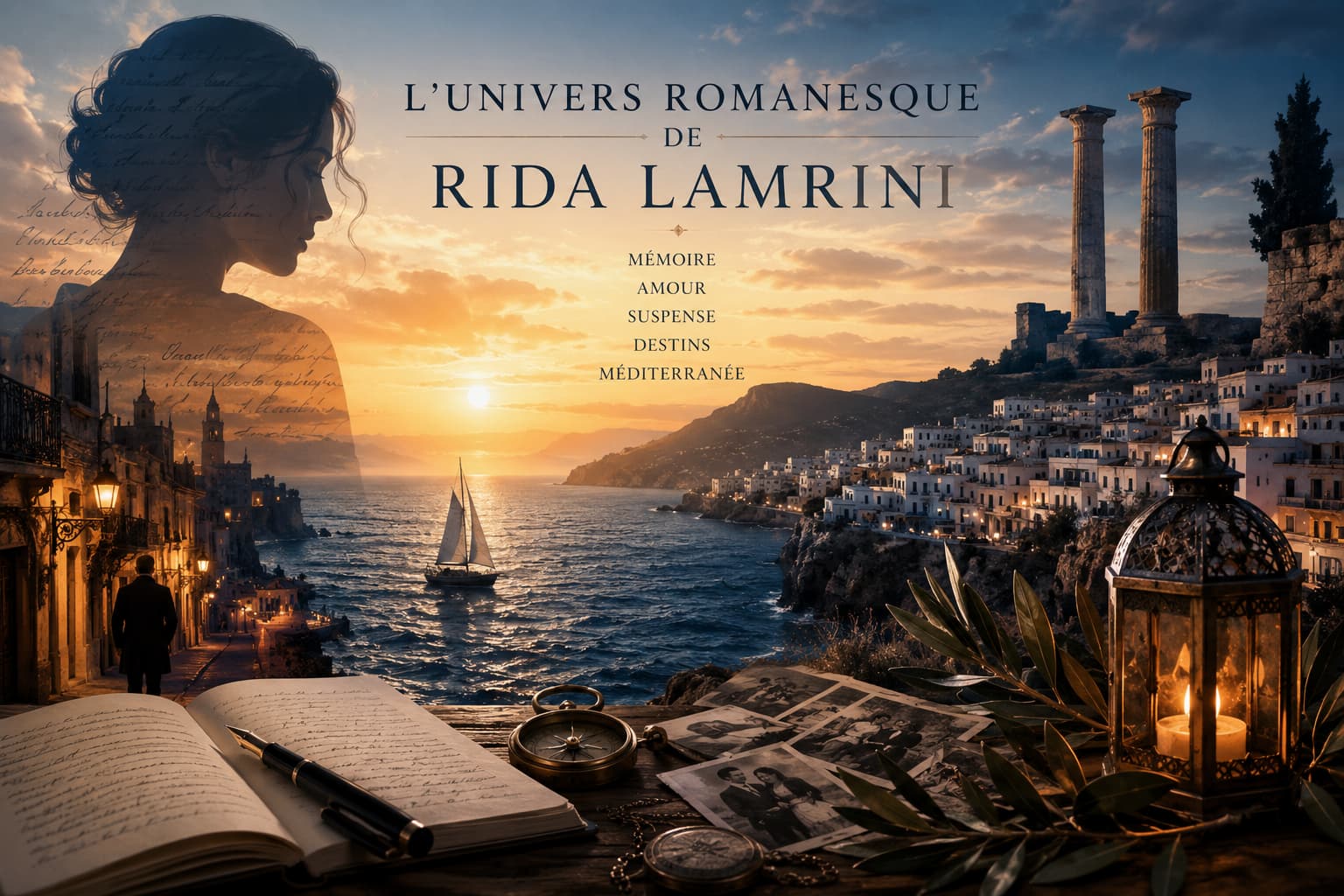
Every writer constructs, book after book, a territory of their own. Plots change, characters renew, settings evolve, but certain questions remain. They return in different forms, like variations on the same theme.
This is how I conceive my novelistic universe.
I do not seek to always tell the same story, but to explore, from new angles, a few great questions that run through human existence.
01. Characters at the turning point
My novels rarely focus on peaceful lives. They often begin at the exact moment an equilibrium shatters.
An unexpected encounter, a disappearance, a long-buried secret, a betrayal, an exile, a war, sometimes a simple coincidence: it takes very little for a life to change course.
What interests me is not only what happens to the characters, but what events reveal about them. Circumstances bring to light their contradictions, their fears, their loyalties, their renunciations, but also their capacity to reinvent themselves.
The true suspense is born there.
02. Memory as inner territory
Memory holds a central place in my writing. It is never a simple return to the past. It is a force acting in the present.
We are made of memories, forgettings, transmissions, silences, and sometimes wounds we can no longer even name. Some characters seek to recover a forgotten part of their story; others try to free themselves from it.
Between memory and forgetting, their destiny is often decided.
This tension runs through my novels because it runs through our lives.
03. Love in all its complexity
Love is another thread running through my work. Not an idealized love, but a love confronted with time, distance, silences, impossible choices, and the paths life imposes.
I love to explore those moments when feelings collide with reality; when beings continue to love one another without always being able to live together; when bonds transform without disappearing entirely.
Love then becomes a way of revealing the characters, more than a simple novelistic subject.
04. The Mediterranean, a character in its own right
The Mediterranean flows almost naturally through my imagination. It connects continents, cultures, languages, and histories. It is a space of movement as much as of separation.
One leaves a country there, discovers another. One carries memories, dreams, sometimes wounds.
In my novels, it is never a simple backdrop. It accompanies the characters, influences their choices, and carries within it a collective memory that converses with their individual stories.
05. Suspense as a revealer
My novels are sometimes described as psychological thrillers. I understand that reading.
But suspense, for me, is never an end in itself. It serves to reveal the characters. An investigation, a disappearance, a threat, or a mystery only takes on its true meaning if it illuminates the deep motivations of the characters.
I prefer a suspense that reveals over a suspense that merely impresses.
06. Borders that fade
People like to classify books: psychological novel, thriller, historical novel, romantic novel… I understand that necessity.
Yet when I write, these categories lose their importance. History often meets the intimate. Suspense encounters emotion. Reflection dialogues with action.
I do not seek to belong to a particular genre, but to tell stories where several dimensions of human experience can coexist.
07. One universe, many entry points
Each novel can be discovered independently from the others. I hold to that freedom.
A reader must be able to enter my universe through any book, without feeling they have arrived in the middle of a story already underway.
But those who continue reading gradually discover echoes, correspondences, returning characters, deepening themes, and questions that take on a new light.
My novels converse with one another without ever imposing on each other.
08. A work in motion
I do not consider this universe a finished territory. Each new book brings a voice, a perspective, an era, or an additional landscape.
What remains are not the plots. What remains are the questions.
What do we do with our memory?
How does love withstand time?
What becomes of our commitments when circumstances change?
How do places shape those who inhabit them?
It is around these questions that my novelistic universe continues to be built, book after book. It is this universe, more than the repetition of characters or plots, that connects each of my novels.
« What remains are not plots. What remains are questions. »
— Rida Lamrini
Read on the blog
Find the full version of this article on Rida Lamrini's blog.
Discover the other founding texts that make up Rida Lamrini's literary and editorial vision.